City Guide
3 Days in Rome: From Ancient Streets to Neighborhood Tables
A walkable three-day Rome itinerary that separates ancient sites, historic squares and neighborhood life into realistic days.
The order for booking Rome
Suggested planning structure. Adjust for arrival time, energy and current access conditions.
| When | Area | Planning note |
|---|---|---|
| First | Colosseum or Vatican anchor | Confirm ticket type, names and entry time. |
| Then | Match accommodation to your days | Compare Monti, the historic center and Prati. |
| Last | Meals and short walks | Leave room between fixed bookings. |
A walkable three-day Rome itinerary that separates ancient sites, historic squares and neighborhood life into realistic days.
The right way to fit Rome into three days
Rome looks compact on a map, yet stone streets, queues and heat stretch every day. Follow one historical axis at a time: ancient Rome on one day, the historic center on another, and the Vatican plus the river on a third. This removes unnecessary cross-city returns.
- Book one major timed visit per day
- Use the hottest hours for lunch or an indoor pause
- Wear supportive shoes and carry a refillable bottle
Day 1 — Ancient Rome and Monti
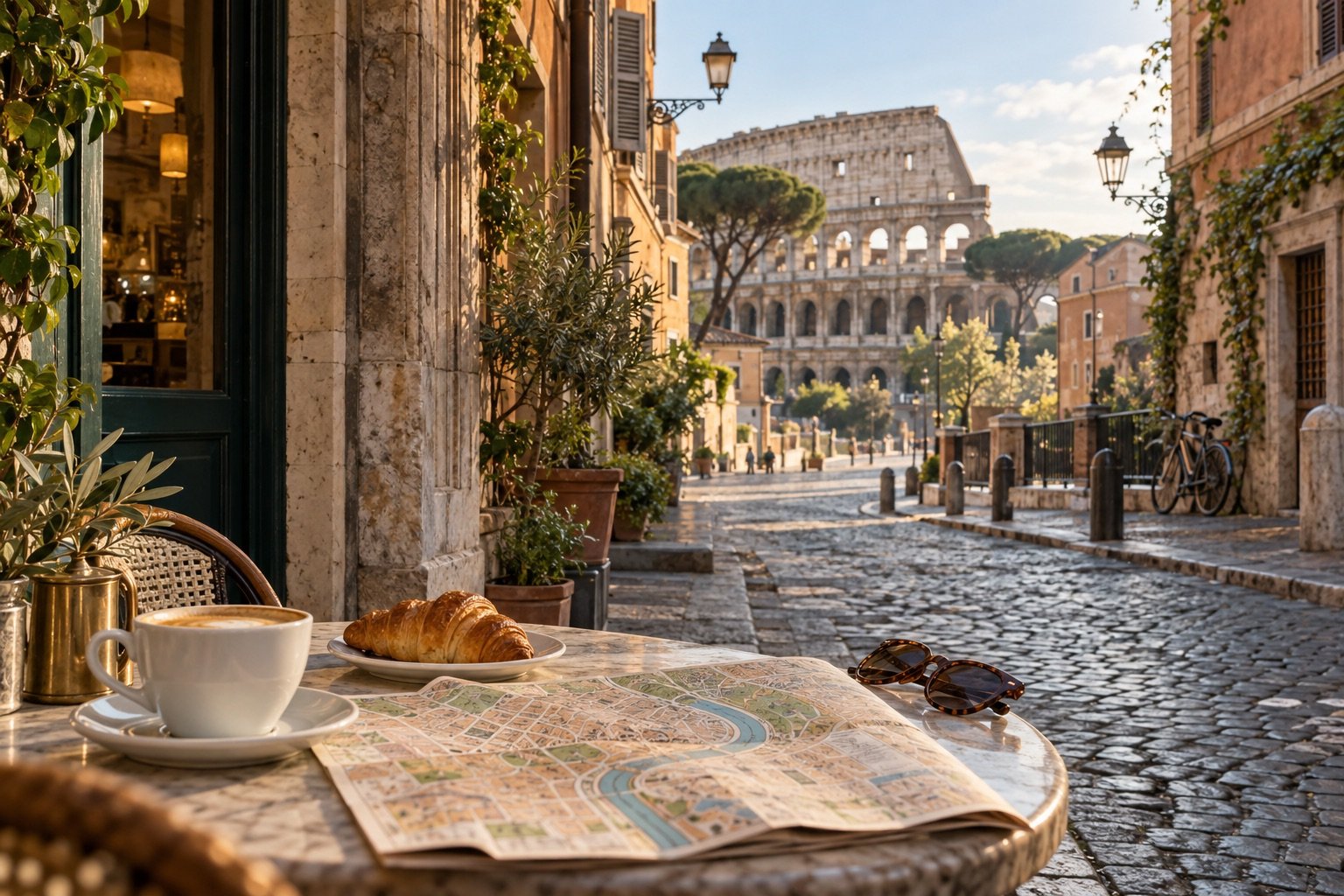
Give the morning to the Colosseum, Forum and Palatine area. Ticket products and entry procedures can change, so verify the current system through official channels. After the archaeological zone, slow down in Monti rather than adding a distant museum.
Continue toward the Capitoline area or Piazza Venezia if energy allows. You will spend longer on your feet than the map suggests, so choose dinner somewhere with an easy return to your accommodation.
Day 2 — Historic center and the river line
Walk the Trevi, Pantheon and Navona axis early. Treat the connecting streets as part of the experience rather than racing between photo points. Moving from Campo de’ Fiori toward the Tiber and finishing in Trastevere creates a natural one-direction route.
Mark several restaurant alternatives instead of building the evening around one queue. Good food planning in Rome is about neighborhood options, not a single supposedly essential table.
Day 3 — Vatican City and Prati
Protect most of the morning for either the Vatican Museums or St Peter’s area and avoid a schedule that rushes both. Security, clothing and entry procedures change; confirm them with official sources shortly before the visit.
Use Prati for a calmer lunch, then walk around Castel Sant’Angelo and the river. Leaving the final evening open lets you return to a favorite area or recover something weather displaced.
Where to stay
Centro Storico is convenient but often expensive. Monti balances access to ancient sites with evening atmosphere; Prati can offer a calmer, more ordered base. Around Termini, inspect the exact street and late-evening return route rather than judging the district by the station name alone.
Confirm air conditioning, lift access and luggage storage, especially in summer. In historic buildings, the floor and lift details may matter more than polished room photography.
Budget, transport and official information
Many central routes work on foot, while a bus or metro ride at the end of the day can preserve energy. Compare individual tickets, day use and airport transport against your actual itinerary. Check Rome’s official visitor information for current access and transport guidance.
Build the budget in layers—accommodation, essential reservations, food and flexible spending—rather than relying on one fixed daily figure.
Common mistakes in Rome
Combining the Vatican, Colosseum and Trastevere in one day may be technically possible, but it reduces the city to queues and transfers. Keep the major areas on separate days.
Stone paving, sun and crowds slow the body. Plan around real rest needs instead of map minutes, and name one optional stop each day.
How to spot an overloaded Rome day
If a morning includes both the Forum and the Vatican, separate the anchors. Entry, security, navigation and a rest after leaving all count. Map walking times cover only the distance between doors. After the major reservation, choose lunch nearby and keep at most one additional afternoon focus.
On the historic-center day, let the streets between squares become part of the visit. Not every point between Trevi and Navona needs a long stop. Check the evening connection to your accommodation before dinner so that returning does not become a last-minute rush.